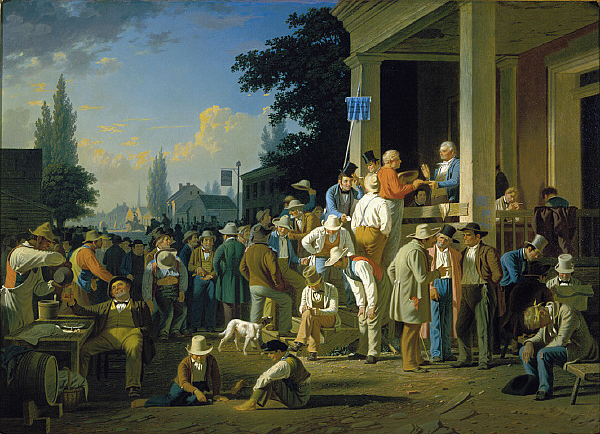
For most of the history of this country, you walked to your county courthouse on election day, the judge swore you in on a Bible, and you said your votes out loud. The clerk wrote them down in a poll book. Your neighbors heard them. The clerk knew you. He knew your father. He knew which farm was yours and which church you belonged to, and so did everyone else standing around the courthouse. That was the audit trail, and it worked. The vote was a spoken act of citizenship, witnessed by the community you actually lived in.
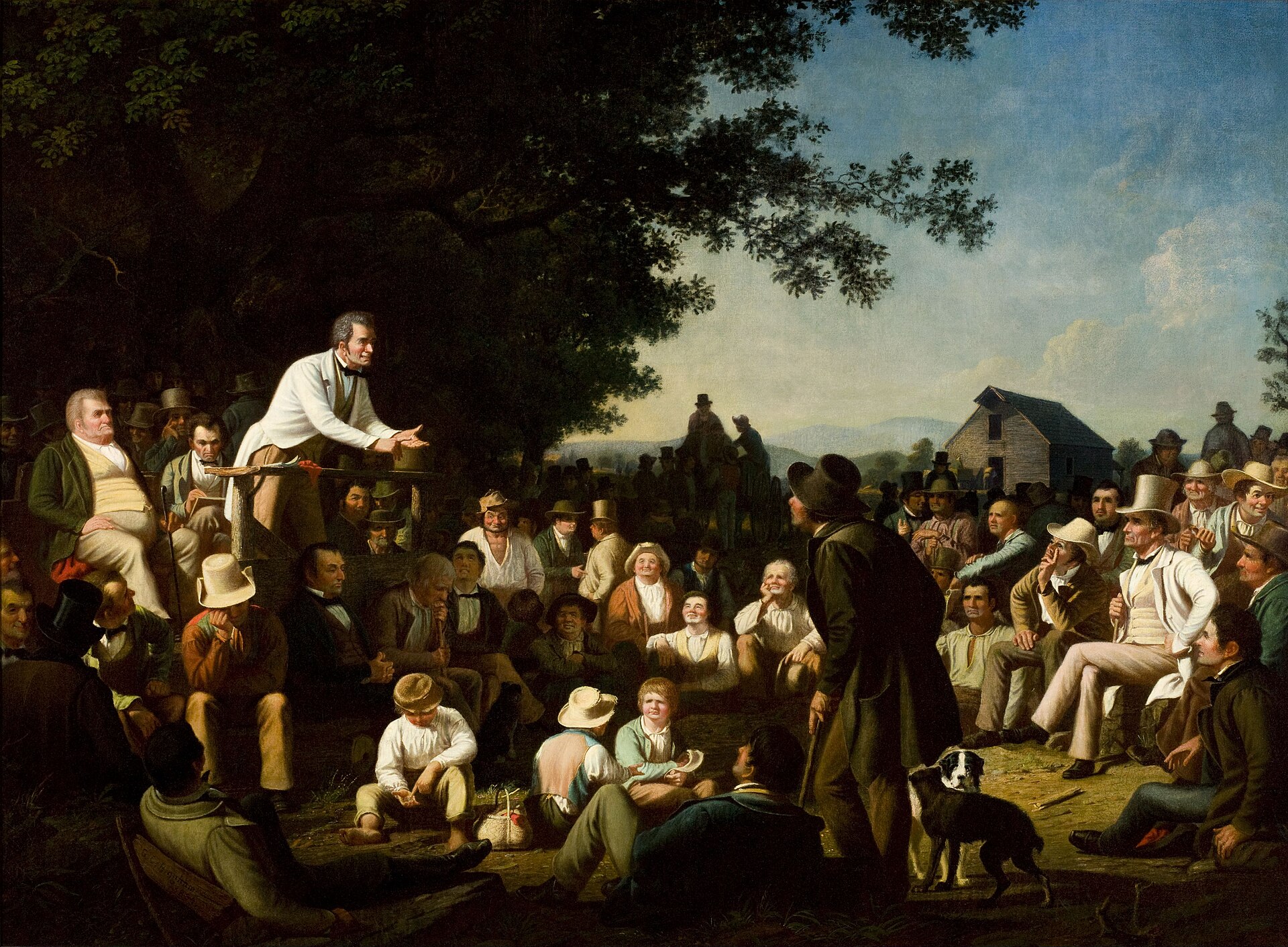
The procedure was simple enough that a Virginia county clerk in 1830 could run an election with three men and a book. The voter arrived at the courthouse. A judge had him swear on a Bible that he was who he said he was, and that he had not already voted that day. Once sworn in, the voter walked up to the clerk, gave his name, and called out his chosen candidate for each office on the ballot. The clerk wrote it down. Witnesses heard it. The men around the courthouse, his neighbors, his pastor, the local newspaperman, all knew exactly what he had done.
The whole point of the procedure was that nobody could lie about it later and nobody could fake it in real time. You could not impersonate someone the clerk had baptized at the Methodist church, or whose father he had served with in the militia. You could not stuff a ballot box that did not exist. You could not produce a hundred ghost votes after the polls closed, because the votes had been spoken aloud and written down with witnesses present. Fraud was structurally hard not because of regulation, but because the community was its own database. Voting was a public act of civic standing, like serving on a jury or appearing in court.
Viva voce voting was not a fringe practice. It was the default in much of the country well into the period when most Americans alive today think of as modern. The University of Virginia's First Vote project, which has reconstructed surviving poll books from Alexandria and Newport, has the count of viva voce states by decade.
Read that timeline again. From the founding to the Civil War, voting aloud was a normal thing that a meaningful share of the country did. Jefferson voted that way. Madison voted that way. So did Patrick Henry, Andrew Jackson, James Polk, Henry Clay, and every Virginia and Kentucky senator and congressman the country produced through about 1865. They were not eccentric. They were doing what their fathers had done.
People remember the Bible-swearing part as a quaint detail. It was not. It was the actual epistemic foundation of the procedure. The framers and the generation after them did not believe a signature on a registration card was what made a man honest. They believed an oath sworn to God, in public, was what made a man honest. Perjury before God meant your soul, not a fine. That belief did real work. It is the reason early American election clerks could run elections with three men and a book, and the reason we cannot.
And the Bible oath was constitutional. The text of Article VI, Clause 3 forbids "religious tests" as a qualification for any "office or public trust under the United States." It is talking about federal offices. It says nothing about state-level voter procedures, and the states that used viva voce voting required the Bible oath as standard practice until they abandoned voice voting entirely. The framers wrote that clause to keep Anglicans, Quakers, Catholics, Baptists, and the rest from being shut out of federal office. They did not write it to bar a county clerk from holding up a Bible at the courthouse on election day. The men who ratified the Constitution were the same men running those courthouses. They saw no contradiction. There was none.
What we have done in the last hundred and fifty years is replace divine witness with bureaucratic verification. God's omniscience to the state's surveillance. You do not swear on a Bible at the polling place. You present a driver's license, or in some states nothing at all. You do not fear judgment. You fear an audit, if you fear anything. We chose surveillance as the replacement because the underlying moral consensus collapsed and we needed something to fill the gap. But surveillance is a much worse substitute. It is hackable. It is coercive. It does not make anyone honest. It just makes dishonesty marginally harder to detect, by people whose interest in detecting it is often political.
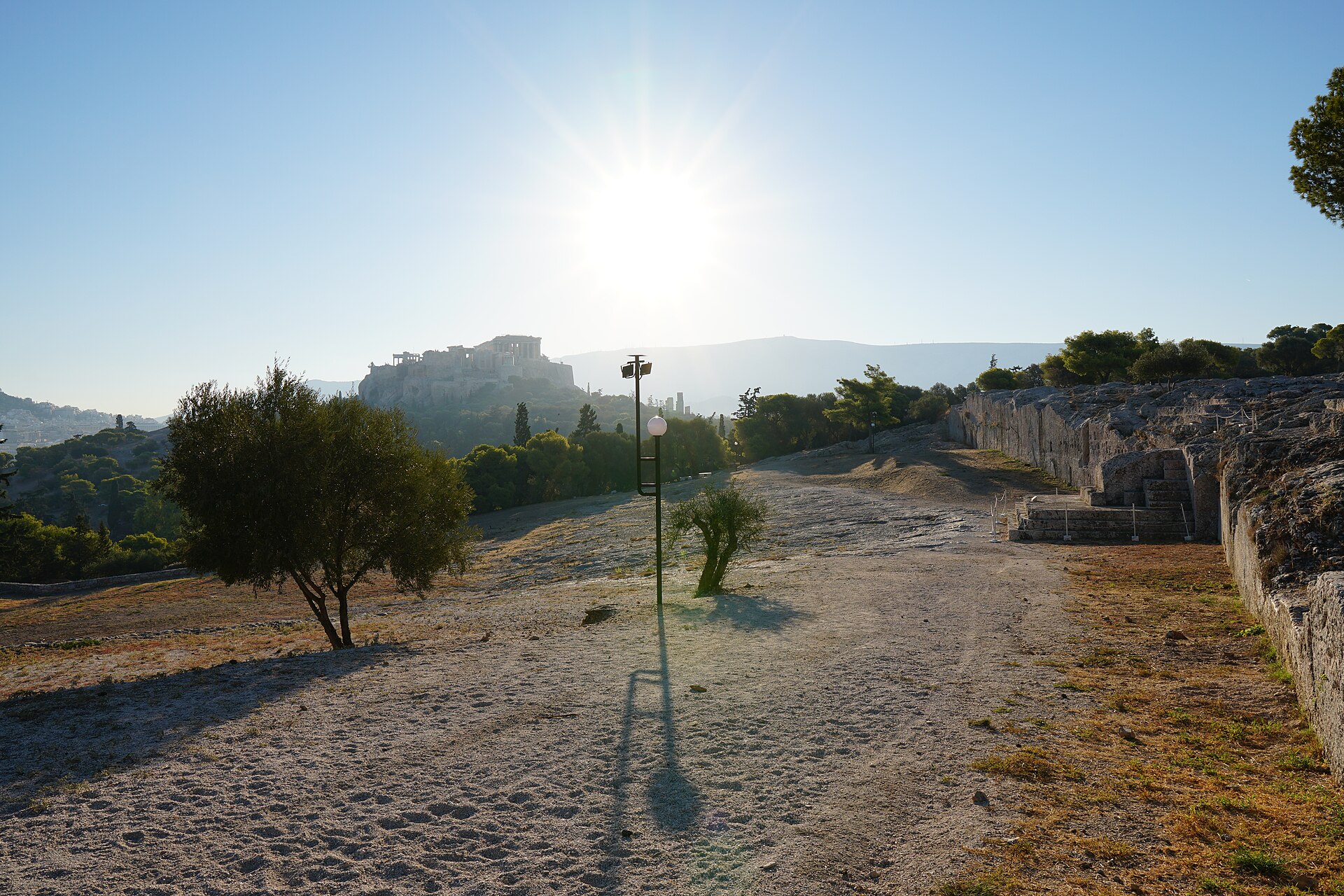
Public voting is not an American eccentricity. It is the original default of democracy itself. The Athenian Assembly, the ekklesia, voted by show of hands on the Pnyx hill. Roughly 6,000 male citizens at a time, gathered in the open air, stuck their hands in the air for the proposals they supported. The chair eyeballed the count. There was no precise tabulation because there did not need to be. The result was obvious to everyone present. The vote and the witness were the same act.
The Athenians knew secret voting was possible. They used it in the lawcourts and they used it for ostracism, when the vote was about banishing a specific citizen and that citizen was standing there. Secrecy was reserved for cases where someone's safety required it. Politics was a public act because politics was the act of being a citizen of a city, and you could not be the citizen of a city in secret.
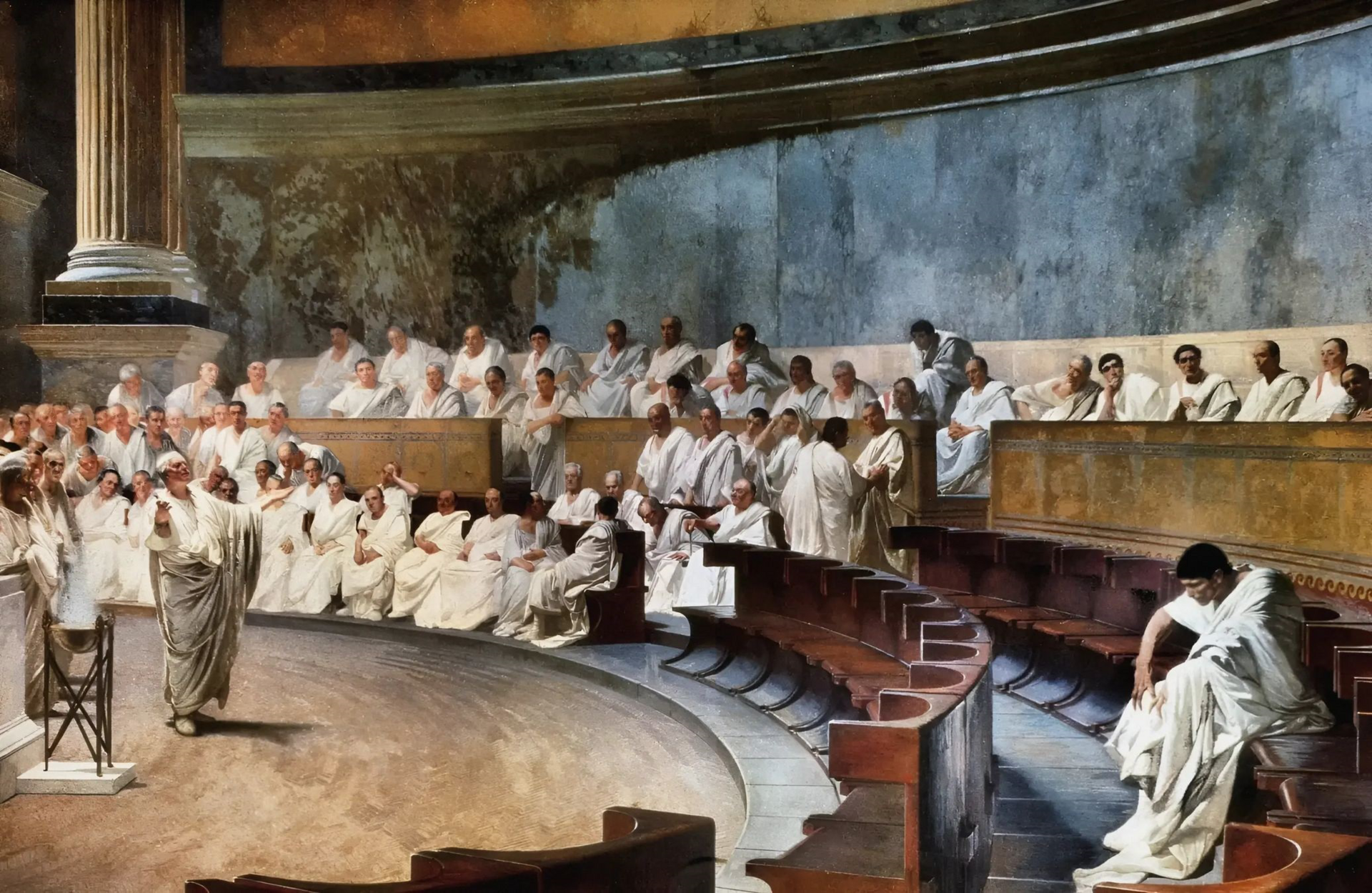
The Roman Republic voted aloud for nearly three and a half centuries. The voter walked up to the official, called the rogator, which means "the asker," and stated his vote. The rogator put a mark on his tablet. The community heard it. The Republic survived in that form from roughly 509 BC to the middle of the second century BC, defeating Carthage twice along the way.
Then Rome went secret. Four laws between 139 BC and 107 BC, the tabellariae, replaced voice voting with a wax tablet and a stylus dropped into a basket. Lex Gabinia in 139 BC introduced secret balloting for the election of magistrates. Lex Cassia in 137 BC extended it to most criminal trials. Lex Papiria in 131 BC reached legislation. Lex Coelia in 107 BC covered treason cases. The Republic was dead by 49 BC, when Caesar crossed the Rubicon. The man who lived through the collapse and wrote about it as it happened was Cicero, and he laid the blame, in part, exactly here.
The case Cicero made is worth pausing on because most modern readers get it backwards. He did not argue that secrecy enabled bribery in some indirect way. He argued the opposite of what you might assume: that the secret ballot made bribery easier, not harder, because under public voting a bribed man could be held to his bribe by either the briber or his neighbors. Under secret voting he could take the money and vote however he liked, and nobody could prove which. The transaction shifted from public corruption, which a city could see and punish, to private corruption, which it could not. Cicero saw a citizenry that was being bought and a city that no longer knew it.
The empirical history is harder to argue with. The Republic survived 350 years of public voting. It survived Hannibal, the Social War, and the Gracchi. It did not survive the century after the ballot laws. We are not claiming the wax tablet alone toppled Rome. We are claiming Cicero saw something real, and that the historical pattern he described, the loss of public accountability under cover of secrecy, is the same pattern visible in every American jurisdiction where elections have become contested.
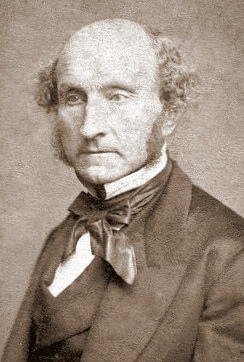
The strangest defender of public voting in the modern era was John Stuart Mill. Mill is the founding philosopher of modern liberalism. He wrote On Liberty. He argued for women's suffrage when that was politically suicidal. He sat in Parliament as a Liberal MP. If you had to pick one nineteenth-century figure whose name still anchors the progressive intellectual tradition, it would be him.
In Considerations on Representative Government, published in 1861, Mill argued against the secret ballot. His reasoning was not nostalgia or conservatism. It was a straightforward liberal argument: voting is not a private personal preference. It is the exercise of power over other people. And any exercise of power over others is something a responsible society should require be done publicly, where the wielder can be held accountable by his fellow citizens. The secret ballot, Mill argued, gave voters a way to indulge their worst impulses with no social consequence. He thought that was a recipe for civic decline.
This matters because it disposes of the idea that this argument belongs to one side of the political spectrum. The case for public voting was made by the founder of modern liberalism for liberal reasons. It was made by Cicero for republican reasons. It was made by Aristotle for civic reasons. It was lived by Jefferson, Madison, and the framers for American reasons. The case has been bipartisan, transhistorical, and broadly held for two and a half millennia. The case for ballot secrecy is a hundred and seventy years old, originated in colonial Australia, and was adopted in America in a single Progressive-era reform wave between 1888 and 1910.
Most Americans assume the secret ballot is older than the country, but it is only 170 years old, younger than the Civil War, younger than photography, younger than the steam locomotive. It was invented in Victoria, Australia, in 1856 by a legislator named Henry Chapman, who designed it as a response to a specific set of Victorian-era abuses. The government printed one ballot listing every candidate, distributed it at the polling place, and the voter marked or crossed out names in private. South Australia and Tasmania adopted it the same year. New South Wales followed in 1858. It did not reach America until 1888, when Massachusetts became the first state to require it. Most other states adopted it between 1888 and 1910, in the same Progressive-era wave that gave us direct election of senators, the income tax, prohibition, and the administrative state.
The reformers had a real problem to solve. The intimidation case for the secret ballot was not invented. Tammany Hall paid voters by the visible ballot. Mill owners in Massachusetts fired workers who voted wrong. Southern landlords evicted Black tenants who voted Republican. The Mugwumps and the union men who pushed for the Australian ballot were responding to actual coercion by actual employers and political machines, and they won the argument in their time.
But almost none of that machinery exists anymore. The company town is gone. Plantation labor is gone. Ward bosses paying for ballots are gone. The intimidation infrastructure the Australian ballot was designed to defeat has been gone for most of a century. What we kept was the procedure. What we lost was the witness.
The deal modern America has accepted, mostly without knowing we accepted it, looks like this. We gave up the ability to see each other vote. In exchange we got: registration databases, voter rolls maintained by partisan elected officials, signature-match algorithms, mail-in ballots that travel through commercial postal pipelines, drop boxes that get emptied by named employees, curing windows where rejected ballots are reviewed by panels with discretion, tabulators that get audited by other tabulators, and chains of custody that span weeks and counties and multiple physical handoffs. We tell ourselves the system is auditable. What we mean is that some of the steps are auditable by people we mostly do not know, accountable to processes most of us have never read, in jurisdictions most of us cannot supervise.
None of that is the framers' system. None of it is the Roman Republic's system either, before or after the ballot laws. It is a system designed for scale and for privacy, and it has paid for those goods with a permanent fog of uncertainty about whether the count is honest, an uncertainty that grows worse, not better, every cycle, no matter who wins.
The obstacles are real. The Washington state constitution, Article VI Section 6, requires "absolute secrecy" in the deposit of every ballot. Most other state constitutions have similar provisions, almost all of them put in place between 1888 and 1910 by Progressives responding to a problem most of which no longer exists. To restore voice voting in any state would require a state constitutional amendment, then a federal Voting Rights Act review, then a Supreme Court case, then most of a generation of organizing. That is a hard fight, not a quick one. But the conversation has to start somewhere, and treating the question as off the table is how we ended up where we are.
Even short of full viva voce, the civic principle that public voting served can be partially recovered. Citizens vote in front of their neighbors, the count is conducted in the open, and the audit trail is visible to anyone who shows up to look. That can be rebuilt without literally calling out every vote by name.
In-person voting on election day, with a narrow excuse-required absentee for the military, the medically homebound, and citizens overseas. End universal mail.
Hand-marked paper ballots filled out at the polling place in front of poll workers who live in the precinct.
Counted by hand at the precinct, in public, the night of the election, by poll workers and observers from every party present in the room.
Per-precinct totals posted publicly within hours, before any ballot leaves the building.
Voter rolls and voted/did-not-vote status public after the election, the way they were in Kentucky in 1891.
That is not viva voce. It does not require anyone to speak their vote aloud. But it preserves the part of viva voce that actually mattered, which was that the vote and the count happened in the open, in front of witnesses who could see what was happening with their own eyes. It is roughly how France votes today. It is how several of the most-trusted Nordic democracies vote. It is how American elections were administered as recently as about 1970. The argument that it is impossible at modern scale is refuted by the existence of every country that does it.
There is a version of this argument that says viva voce voting would solve fraud. That is not quite right, and we will not pretend it is. There is no procedure that perfectly prevents a determined criminal from cheating. What public voting did, what the Athenian show of hands and the Roman rogator and the Virginia courthouse clerk all did, was make cheating expensive, visible, and impossible to deny later. It made the vote a public act of citizenship, witnessed by the community, and it placed the burden of honesty inside each voter rather than outside in a database.
We are not the first generation to give that up. The Romans gave it up first. Cicero watched it happen and wrote about it as it was happening. He lost the argument in his time and the Republic he was defending fell within a century. We are in roughly the same position. The ballot laws of 1888 are our Lex Gabinia. The collapse of community knowledge in the modern American city is our Cicero moment.
The framers built a system that assumed Americans would vote in front of each other, swear an oath to God before doing it, and bear the public consequences of their choices for the rest of their lives in the town where they cast them. Every line of that sentence is now culturally illegible to most of the country. The Bible oath sounds like a theocracy. The public vote sounds like intimidation. The bearing of consequences sounds like persecution. The bond between citizen and city sounds like something out of a book.
It is something out of a book. It is in the book the framers swore on, and the books their grandchildren swore on in Kentucky in 1891. And it is the reason any of this still works at all.
Cicero saw it. Kentucky held the line. We are the generation that has to decide what civic life means now that we have given up the witnesses.
Memory comes first, legislation comes later. Most Americans do not know that their great-great-grandfathers voted aloud at the courthouse, that the secret ballot was invented in Australia in 1856, that Cicero spent his career arguing against the tabellariae. Burnham Civic is in the longer project of restoring American civic memory one piece at a time. The viva voce tradition belongs in that project alongside the Committee of Correspondence work and the 1909 Alaska-Yukon-Pacific moment. Different angles on the same recovered country.
If we cannot bring back the courthouse oath, we can at least stop pretending we never had it.