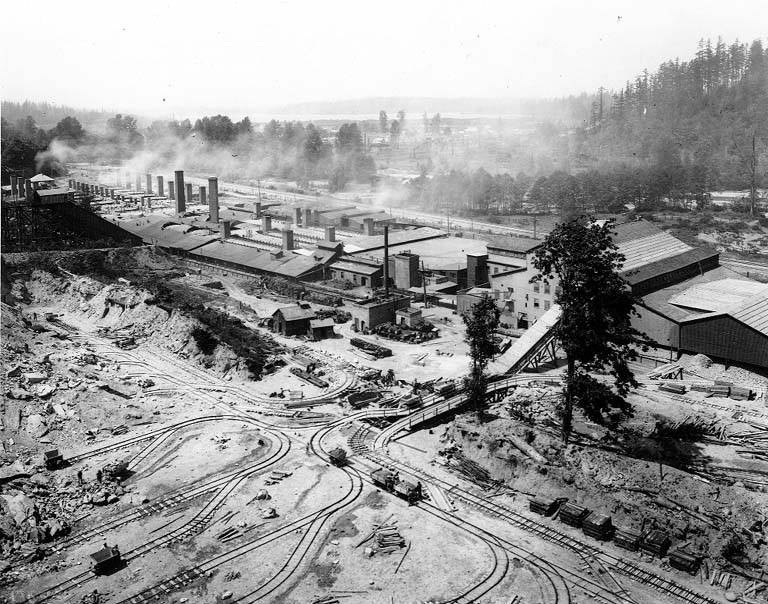
The Denny-Renton Clay and Coal Company vitrified plant at Renton, photographed by Asahel Curtis on August 18, 1910. University of Washington Libraries, public domain.
Between 1886 and 1932 Puget Sound made its own brick, terra cotta, steel, stone, ships, and lumber. Some of that base still operates, and six moves could put it back to work.
Seattle has a draft standard for building in brick, terra cotta, stone, mass timber, weathering steel, and precast concrete. Since August 28, 2025, a federal executive order has directed agencies to prefer classical and traditional architecture, and it applies to federal public buildings expected to cost more than 50 million dollars. Neither document names a plant, a quarry, or a foundry that could supply the work.
The Denny-Renton Clay and Coal Company vitrified plant at Renton, photographed by Asahel Curtis on August 18, 1910. University of Washington Libraries, public domain.
Arthur Denny founded the Denny Clay Company in 1892 on the clay and coal of the Renton valley. By 1905, renamed the Denny-Renton Clay and Coal Company, it was the largest maker of paving brick in the world. It ran a sewer pipe works, a terra cotta works, a Renton paver plant that could turn out 180,000 bricks a day, and a plant at Taylor for pipe and hollow ware, and it made 58 million bricks in 1917. In 1908 the Auburn owners of Meade Pottery joined the Winkle Terra Cotta Company of St. Louis to form the Northern Clay Company, which made the terra cotta for the Frederick and Nelson store, the Coliseum Theatre, and other downtown buildings. Gladding, McBean of Lincoln, California bought Denny-Renton in 1927 and later took over Northern Clay, and the Auburn plant closed in 1932.
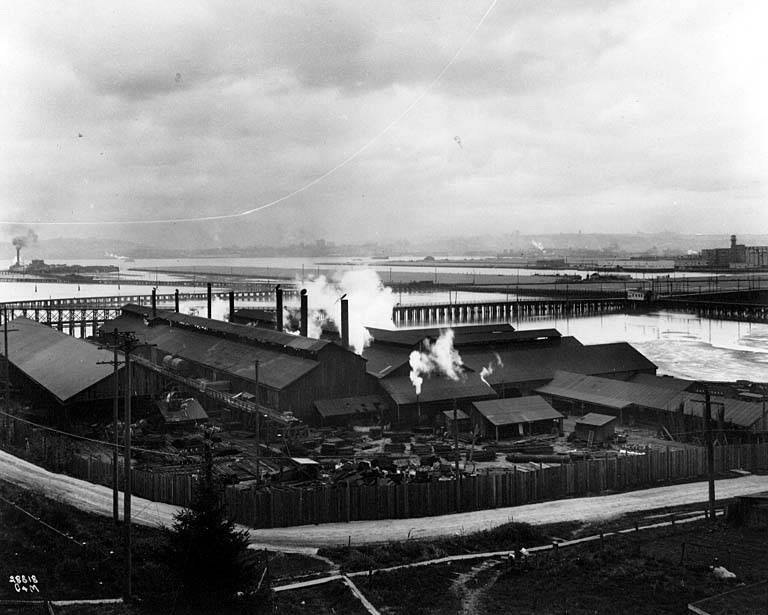
The Pacific Steel Company plant on 30th Avenue Southwest in the Youngstown district of West Seattle, photographed by Asahel Curtis. University of Washington Libraries, public domain.
In 1904 the Pigott family, later known for PACCAR, built a steel mill on the Duwamish tideflats in what is now West Seattle, and it made its first steel in 1905. The mill was once promoted as Seattle's Little Pittsburgh. Bethlehem Steel bought it in the 1920s, it became Seattle Steel in the 1980s and Birmingham Steel in 1991, and Nucor bought it out of Birmingham's bankruptcy in 2002.
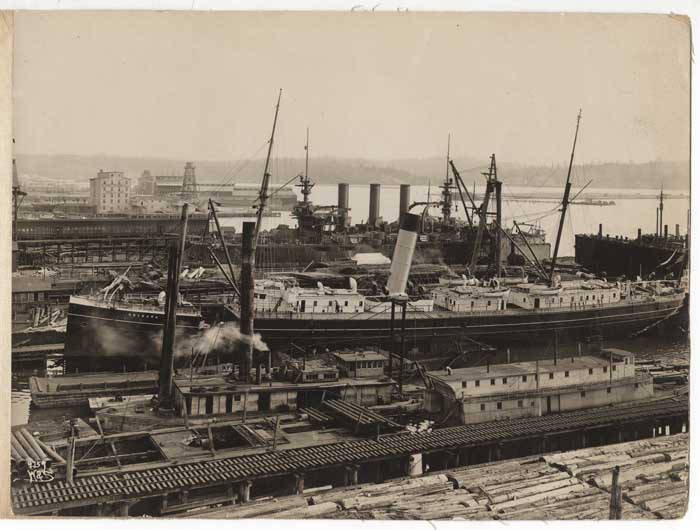
The Skinner and Eddy yard south of Pioneer Square, about 1917. Museum of History and Industry, public domain.
Skinner and Eddy began building its yard south of Pioneer Square on January 17, 1916, and during the First World War it completed more ships for the war effort than any other American yard. It launched 75 ships between 1916 and 1920, a tenth of the nation's wartime tonnage, delivered 232,400 tons in 1918 alone, and set world speed records for building individual hulls before it closed in 1923.
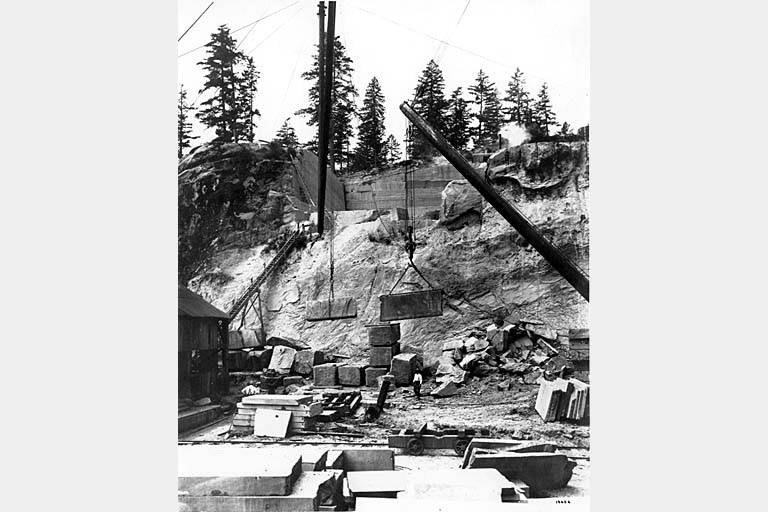
The Hercules Sandstone Company quarry at Tenino, photographed by Asahel Curtis. University of Washington Libraries, public domain.
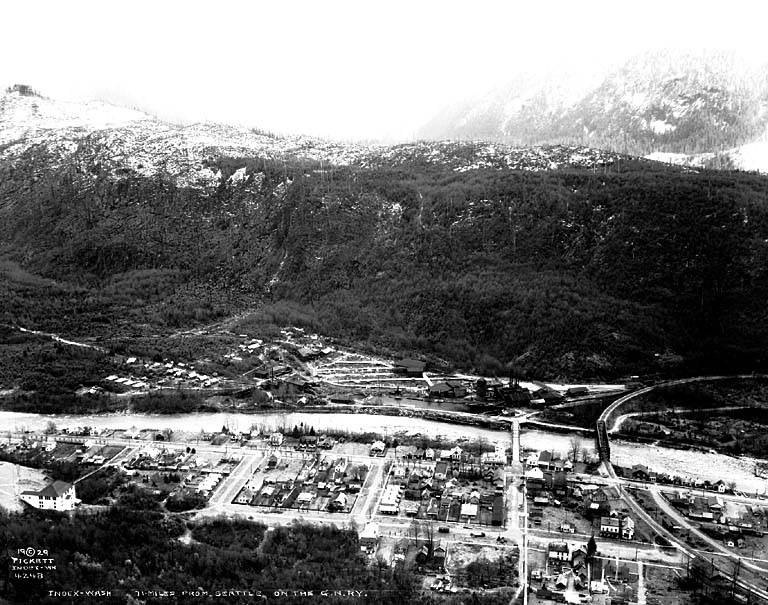
Index from the air in 1929. Lee Pickett photograph, University of Washington Libraries, public domain.
Wilkeson sandstone in Pierce County has been quarried since 1886 and went into the Legislative Building in Olympia, the Pierce County Courthouse, Plymouth Congregational Church in Seattle, the federal building in Everett, and Stadium High School in Tacoma. At Tenino, George VanTine and Wes Fenton formed a stone company in 1888 and shipped their first sandstone in 1889, the year Washington became a state. At Index, John Soderberg opened the Index Granite Company in 1904 beside the Great Northern tracks, where about 70 men quarried granite for buildings in Seattle, Spokane, and Everett.
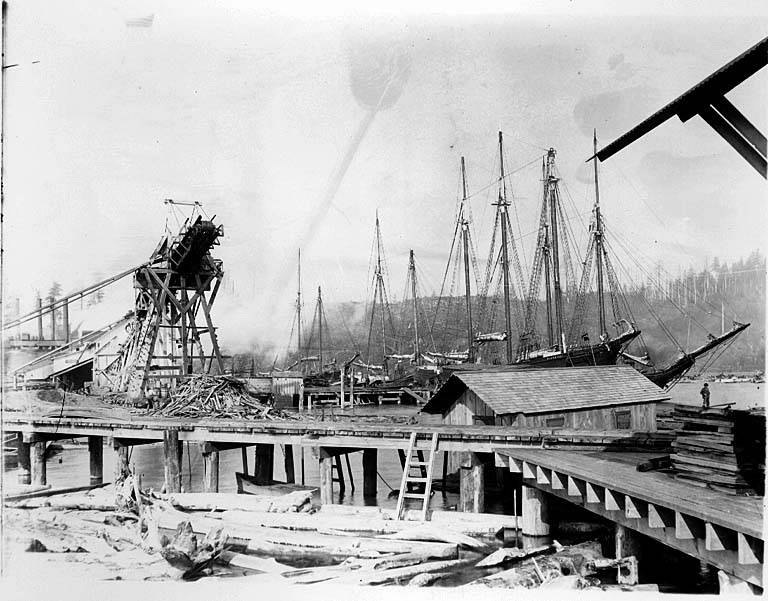
The schooner Pioneer at a lumber mill dock in Hoquiam, about 1892. University of Washington Libraries, public domain.
Through the 1920s the mills of Aberdeen and Hoquiam on Grays Harbor shipped an average of more than a billion board feet of lumber a year. In 1924 the port loaded that year's billionth board foot onto the Japanese steamer Kashu Maru, which earned Aberdeen the title of lumber capital of the world.
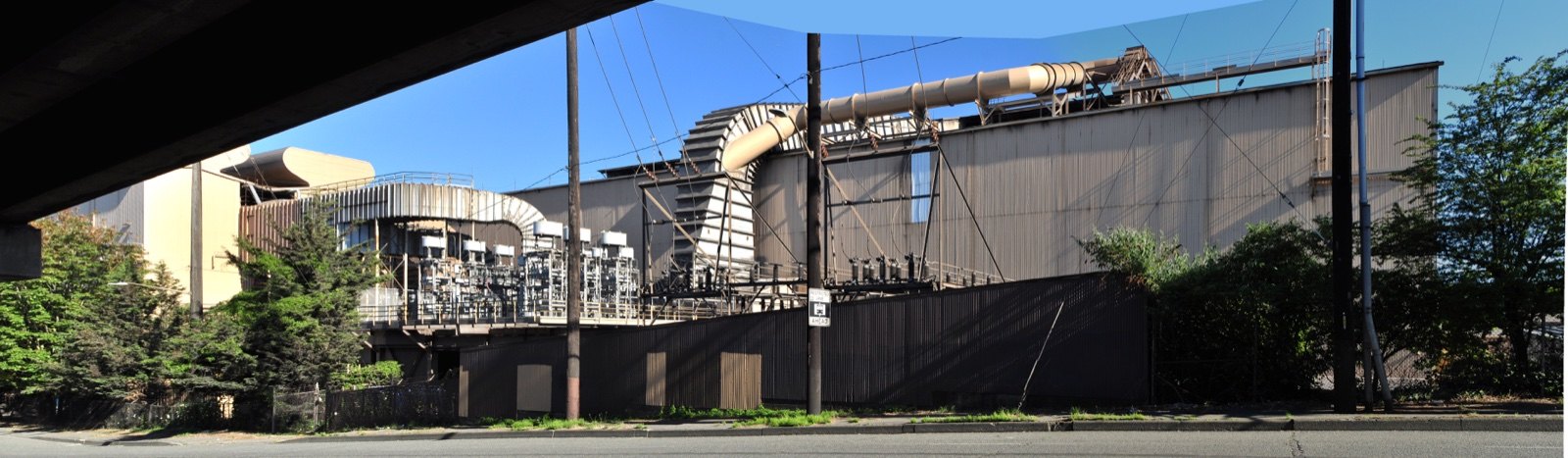
The Nucor mill in West Seattle. Photograph by Joe Mabel, Wikimedia Commons, CC BY-SA 4.0.
Nucor's West Seattle mill employs about 330 people and can produce 1.1 million tons a year of rebar and merchant bar by melting scrap in an electric arc furnace, and it ships across the Northwest, northern California, and Canada. In February 2024 Nucor's board approved 860 million dollars for a second Pacific Northwest rebar mill with capacity of 650,000 tons a year.
Vigor Marine Group runs the former Todd yard on Harbor Island, 27 acres with three large drydocks, and the yard can take ships up to 800 feet long. Its largest dock, 640 by 116 feet with a lift of 20,000 long tons, was bought in South Korea and brought from Tongyeong at a cost of 20 million dollars. The yard works on Washington State Ferries, Coast Guard and Navy ships, and University of Washington research vessels.
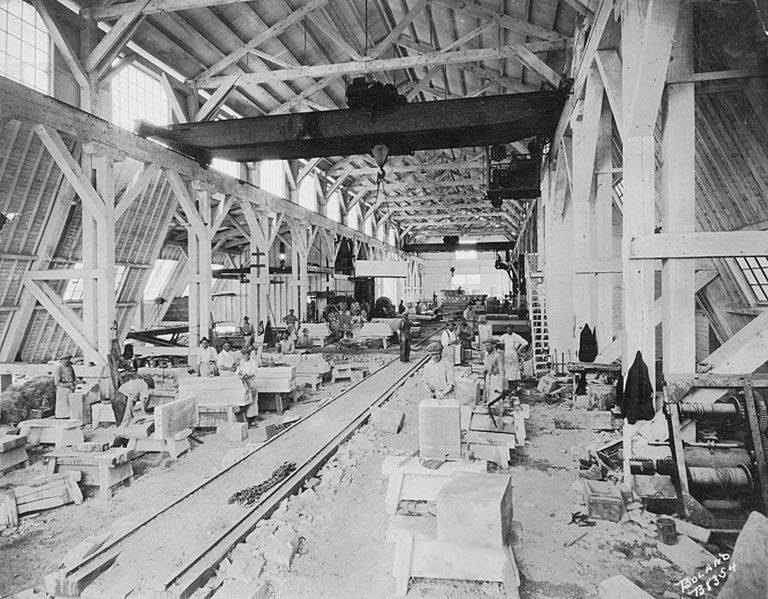
Workers at the Walker Cut Stone Company in Tacoma cutting stone for the Legislative Building. University of Washington Libraries, public domain.
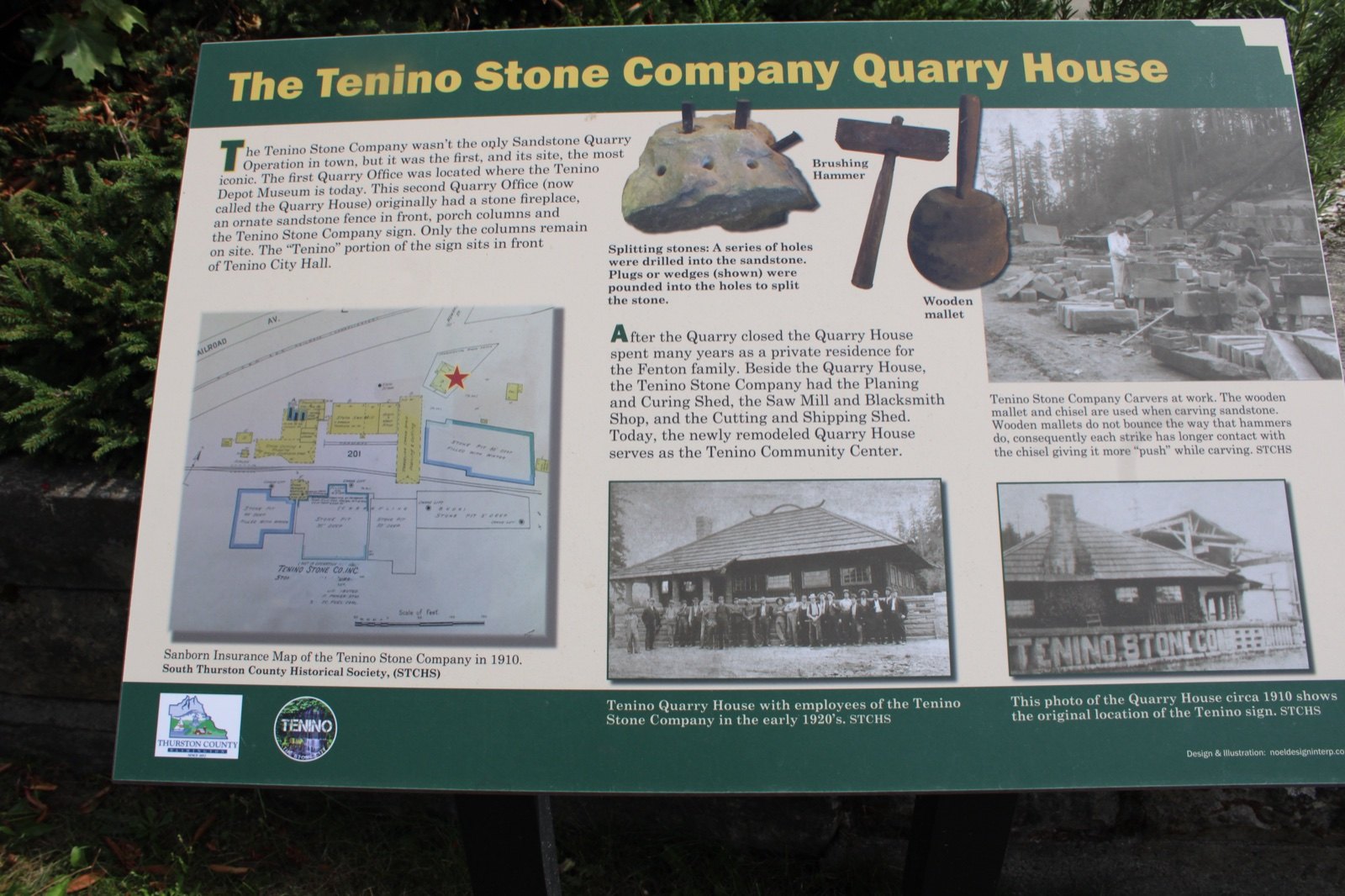
The Tenino Stone Company quarry, now the town's quarry pool. Wikimedia Commons, CC BY-SA 4.0.
Wilkeson Sandstone Quarry, a family business, holds Washington Department of Ecology sand and gravel permit WAG501471 for April 1, 2026 through March 31, 2031, and the state inspected the site on February 11, 2026. It sells pavers, flagstone, and dimension pieces. After the Nisqually earthquake of February 28, 2001 cracked stones on the Legislative Building, master carver Keith Phillips of Tenino carved replacements from Wilkeson stone, and the building's three year rehabilitation and earthquake repair was finished in 2004 at a cost of 120 million dollars. Marenakos Rock Center of Issaquah sells Tenino sandstone for restoration work from a quarry that closed in 1938 and reopened in the early 1990s.
Mark and Patty Anderson started Walla Walla Foundry in 1980 with one client, the sculptor Manuel Neri. It now employs about a hundred technicians in 100,000 square feet, pours 400 to 1,800 pounds of bronze at a time, and does three dimensional scanning, pattern printing on two Voxeljet machines, CNC machining, waterjet cutting, and patination on site. In 2022 it cast The Embrace for Boston Common, its largest work by surface area, and the Walla Walla Union-Bulletin has called it arguably the largest contemporary art foundry in the country.
Gladding, McBean, founded in 1875, still makes architectural terra cotta in Lincoln, California, says on its website that it uses laser scanning and computer aided design, and made the terra cotta on the Flatiron and the Wrigley Building. Boston Valley Terra Cotta makes it near Buffalo, New York. Closer to Seattle, Olympian Precast in Redmond has made architectural precast and cast stone since 1987, Mutual Materials makes clay brick at Kent, and Freres Engineered Wood of Lyons, Oregon opened a 182,000 square foot mass plywood plant in December 2017 after investing about 40 million dollars. Sierra Pacific has run a lumber mill at Aberdeen since 2002, and Herrenknecht, the German maker of tunnel boring machines, has its North American office in Sumner.
The Index granite quarry has no current operator. The Cosmopolis pulp mill in Grays Harbor is idle with its power off, and the Environmental Protection Agency began a time critical removal action there on August 3, 2026, which leaves the county's sawmills without a local buyer for chips. The Auburn terra cotta plant closed in 1932, and restoration terra cotta for Seattle buildings now comes from Gladding, McBean or Boston Valley.
Five downtown buildings show the terra cotta the region made and bought between 1910 and 1918.
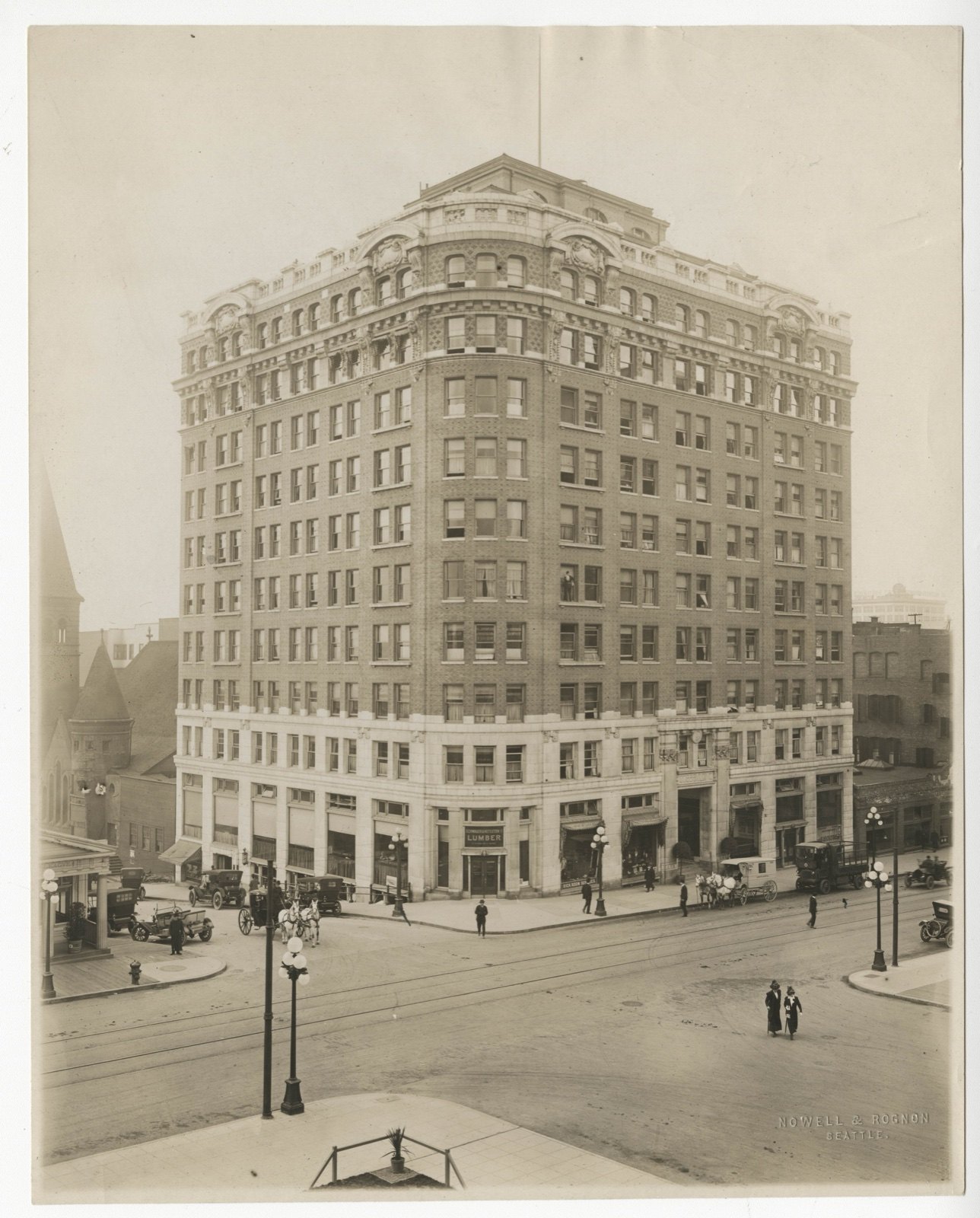
The Cobb Building at Fourth and University, about 1910. Digital Public Library of America, public domain.
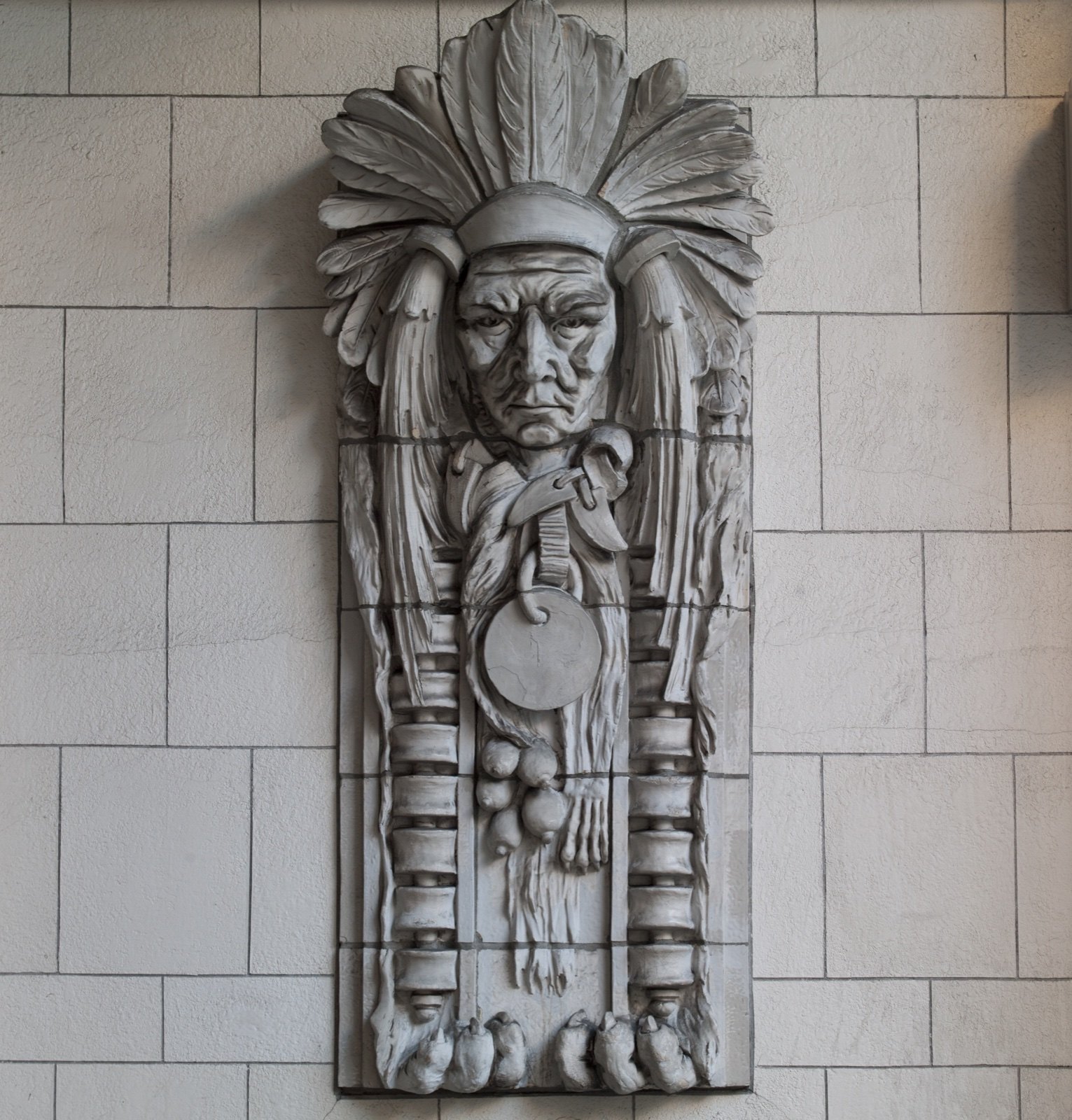
A Native American head on the Cobb Building cornice. Library of Congress, public domain.
The Cobb Building at Fourth and University opened in 1910. Howells and Stokes of New York designed its eleven stories, Abraham Albertson supervised construction, and it was an early high rise medical office building. It was the third building in the University of Washington's Metropolitan Tract and is the only one of that original design still standing. Its cornice at the ninth and tenth floors carries Native American heads sculpted by Victor Schneider. It was listed on the National Register on August 3, 1984 and now holds apartments.
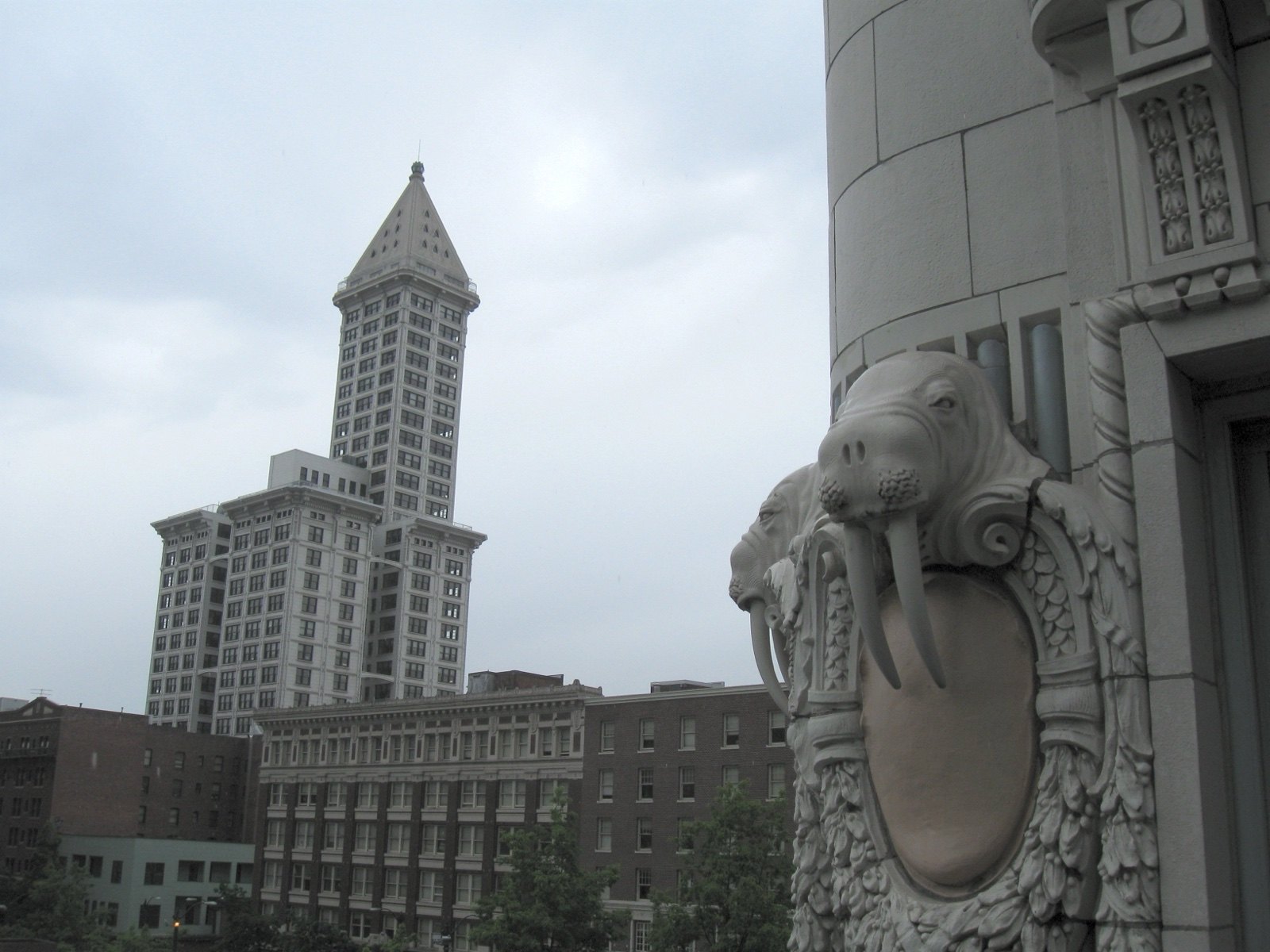
The Arctic Building at Third and Cherry. Wikimedia Commons, CC BY-SA 3.0.
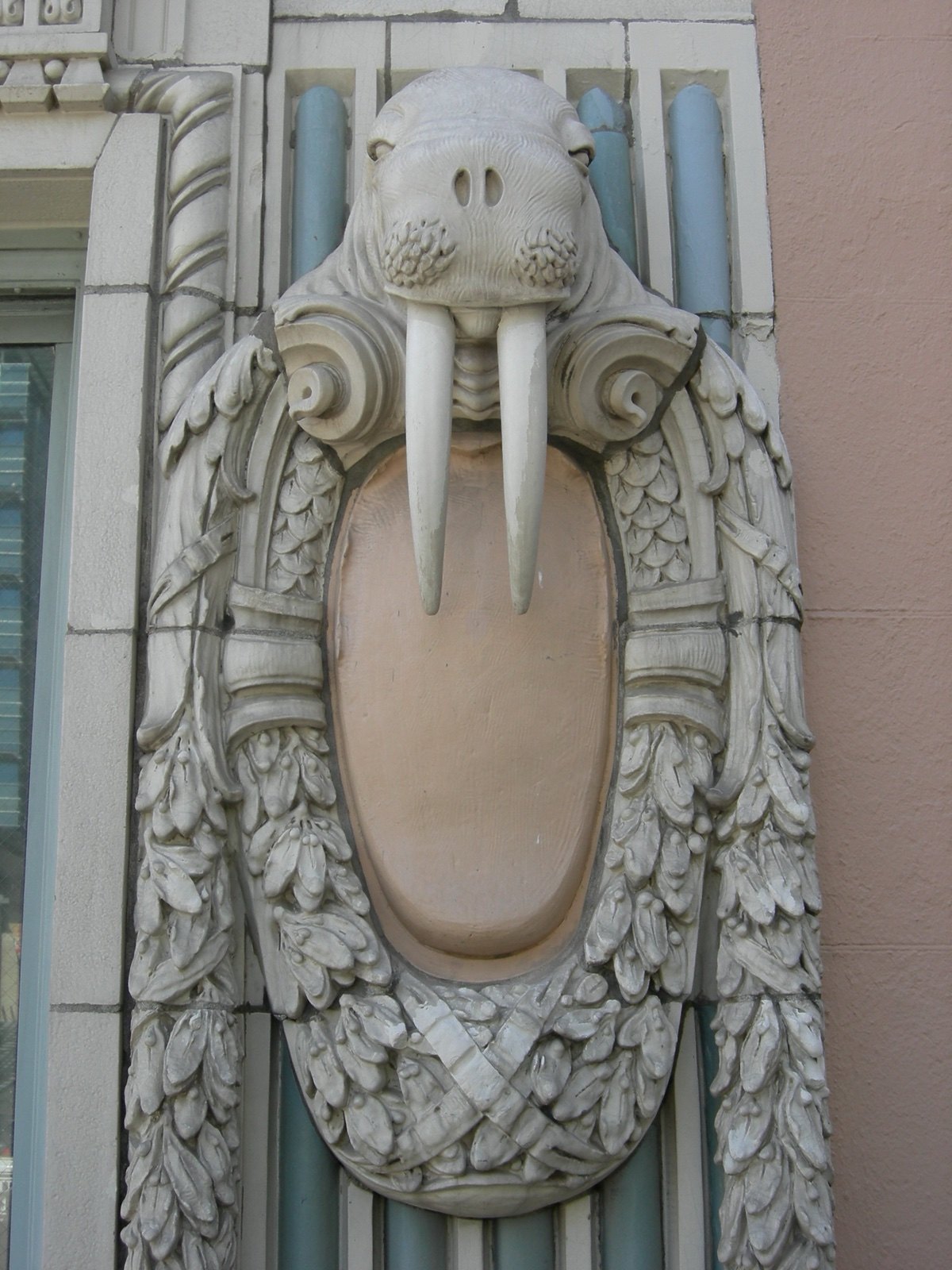
A walrus head on the Arctic Building. Photograph by Joe Mabel, Wikimedia Commons, CC BY-SA 3.0.
The Arctic Building at Third and Cherry was finished in 1916 for the Arctic Club, which veterans of the Klondike gold rush formed in 1908. A. Warren Gould designed it, and its terra cotta, made by Denny-Renton in cream white with blue and orange brown glazes, is counted among the finest multicolored matte glaze work in Seattle. Walrus heads ring the third floor. The building was listed on the National Register on November 28, 1978, became a Seattle landmark on December 13, 1993, and has operated as a hotel since 2008.
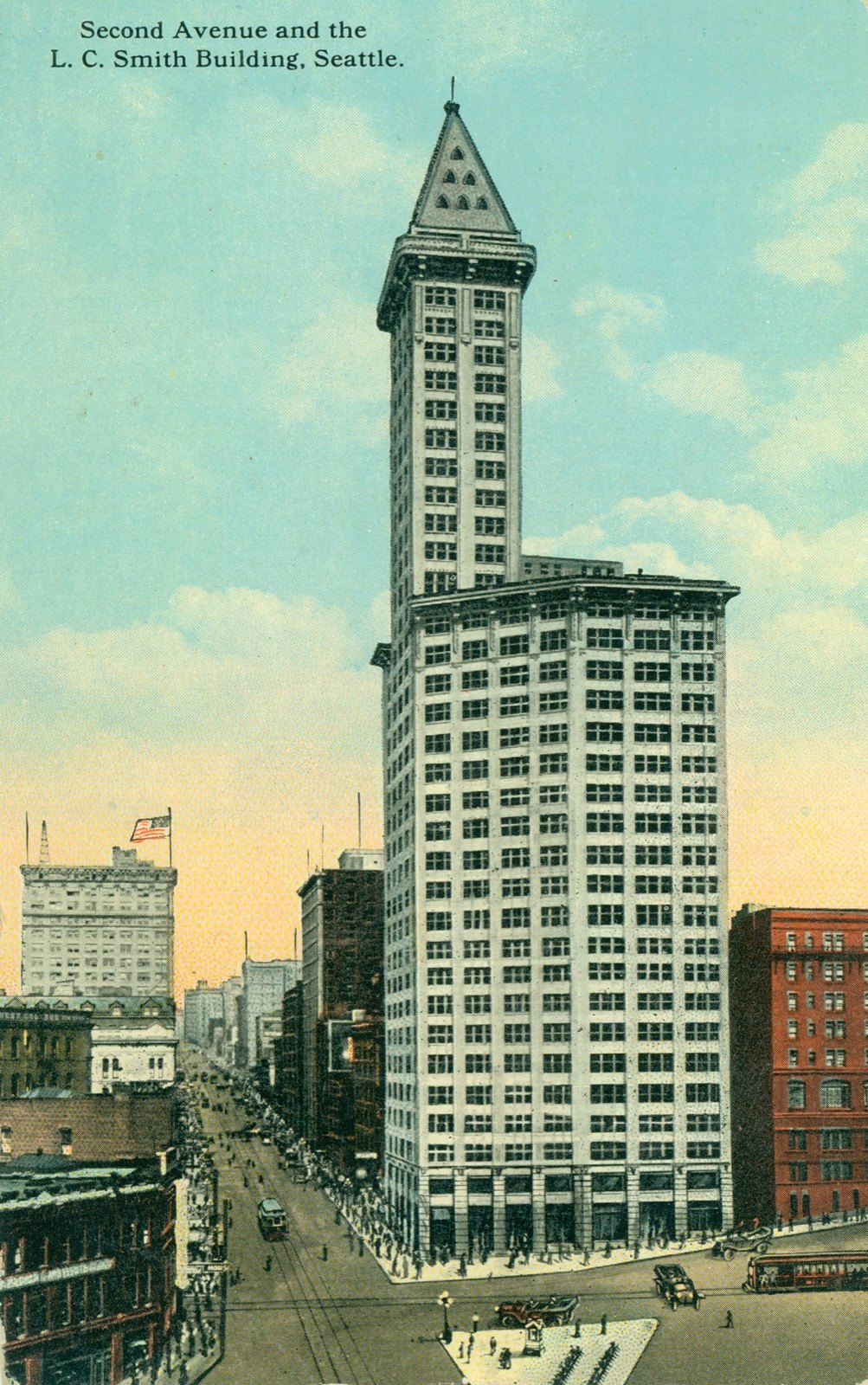
Smith Tower, about 1914. University of Washington Libraries, public domain.
Smith Tower opened in 1914 at Second and Yesler. Gaggin and Gaggin of Syracuse designed its 38 stories and 462 feet, with granite at the base and white terra cotta above made by Gladding, McBean, and it cost about 1.5 million dollars. It was the tallest building west of the Mississippi until 1931 and the tallest in Washington until the Space Needle opened in 1962.
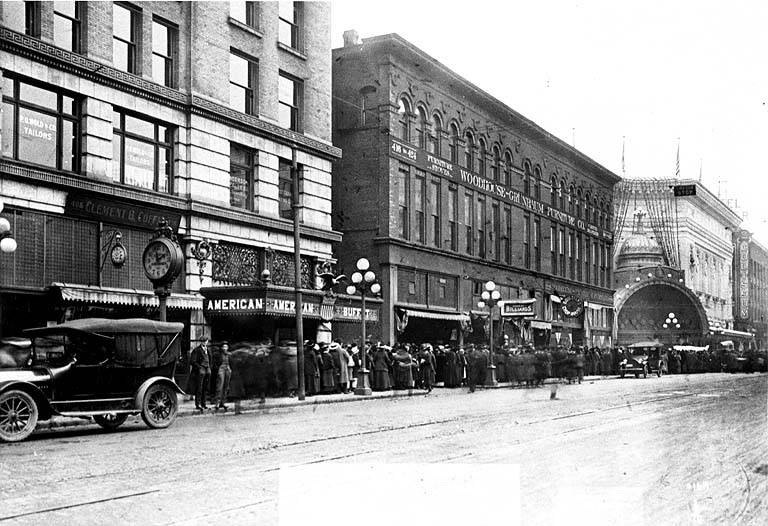
The Coliseum Theatre at Fifth and Pike, about 1916. University of Washington Libraries, public domain.
The Coliseum Theatre opened on January 8, 1916 at Fifth and Pike. B. Marcus Priteca, the architect of Pantages theaters across the West, designed it, and Northern Clay made its glazed terra cotta. The theater was later converted to a store, and the terra cotta facade remains.
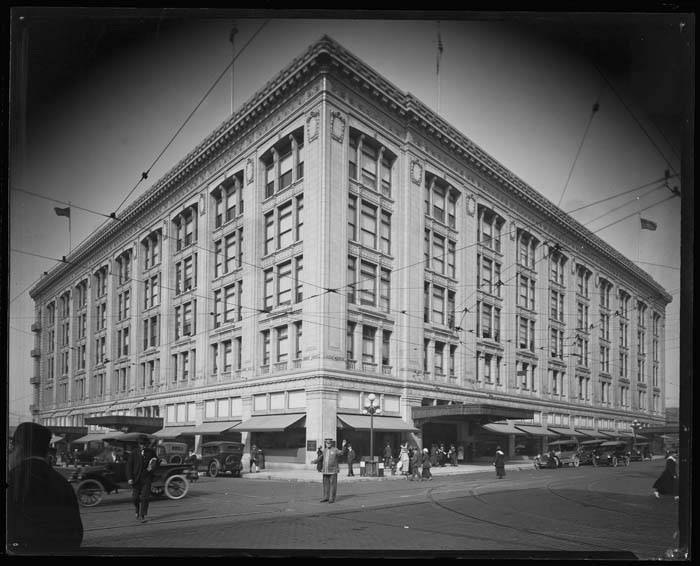
The Frederick and Nelson store at Fifth and Pine, about 1918. Museum of History and Industry, public domain.
Frederick and Nelson opened its six story store at Fifth and Pine on September 3, 1918, six blocks north of the old retail core. John Graham designed it, and Northern Clay made its terra cotta. Nordstrom has used the building as its flagship store since 1998.
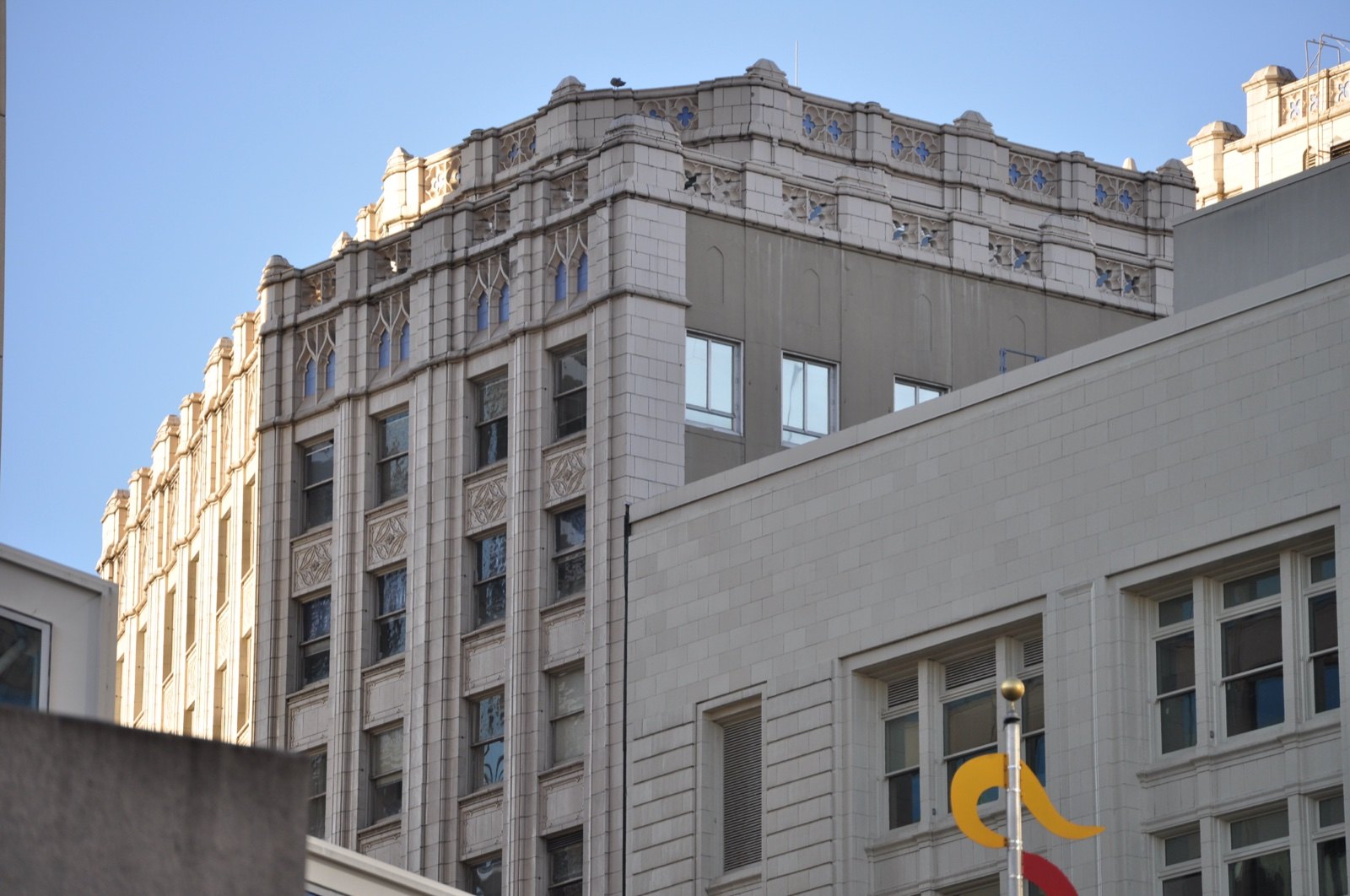
Detail on the Medical Dental Building of 1925. Photograph by Joe Mabel, Wikimedia Commons, CC BY-SA 3.0.
Later buildings such as the Medical Dental Building of 1925 carried the material through the 1920s, and repairs to that stock are steady work for anyone who can model and replace a damaged piece.
An industrial plant needs raw material, energy, skilled labor, land, transport, capital, and demand.
Sandstone is still quarried at Wilkeson and Tenino, and the West Seattle mill melts scrap, so it needs no iron ore or coke. Douglas fir grows on private and state trust land, though state trust land produced 389 million board feet in fiscal 2025, compared with more than 900 million a year in the early 1980s, and 77,000 acres of older second growth were set aside in August 2025. Most of the clay in the Renton and Kent valley lies under warehouses and distribution centers, and the Index granite quarry has no operator.
Washington's electricity prices are among the lowest in the country because most of the state's power comes from hydroelectric dams operated by the Bonneville Power Administration and public utilities, and the average industrial bill runs about half the national figure. Electric arc furnaces, induction furnaces for bronze, and electric kilns all run on that power, so the coal that fired the original terra cotta plants is not needed. Data centers in Grant County and elsewhere draw on the same supply, so a new plant would need to secure its rate early.
The ironworkers, welders, and shipwrights who staff the Nucor mill and the Vigor yard are already in the region. No plant in Washington makes architectural terra cotta today, so the modeling, mold making, pressing, and glazing trades would have to be rebuilt. Scanning and computer modeling now cover much of the modeling work, and pressing and glazing would have to be taught with help from Gladding, McBean or Boston Valley.
Seattle keeps two manufacturing and industrial centers, the Greater Duwamish and Ballard Interbay, which cover about 12 percent of the city. The mayor signed new industrial zoning for both on July 25, 2023, and the city released draft subarea plans on July 15, 2026. A large new plant is more likely to go outside the city, near the Wilkeson quarry in Pierce County, near the port and timber at Grays Harbor, or along Interstate 5 at Tenino.
The region has deepwater ports at Seattle, Tacoma, and Grays Harbor, the BNSF and Union Pacific railroads, the 135 mile Puget Sound and Pacific short line from Aberdeen and Hoquiam to Centralia, and Interstate 5. The weak link is Snoqualmie Pass, where Interstate 90 closes during winter storms, which is the argument for the twin tunnels.
None of the moves below has a financed sponsor yet, and the quarries and the foundry are family businesses. The comparables for a mass timber plant are Freres at about 40 million dollars, Vaagen Timbers at Colville, which budgeted 35 million for a second line with 150 percent of the first line's capacity, and Mercer Mass Timber at Spokane Valley, which committed 50 million in upgrades and a further 30 million expansion. Nucor's 860 million dollar rebar mill shows the scale of a new steel plant.
The executive order covers federal buildings over 50 million dollars and makes the General Services Administration responsible for carrying it out. Burnham Civic's federal property series covers nine federal sites in Seattle, including Fort Lawton, Federal Center South, and the Sand Point archives, and the state spent 120 million dollars rehabilitating a single building in 2004. The City of Seattle has adopted no materials standard and budgeted nothing for one, and without public orders the plants above will stay at their current size.
India had to send the roughly 6,500 bronze panels for its 182 meter Statue of Unity, about 1,700 tonnes of metal, to a foundry in China because no foundry in India could take the job. Walla Walla Foundry can already cast large figures in sections from printed patterns. The move is to list it, with at least one more foundry for capacity, in a public registry of suppliers and to direct early federal monument orders under the executive order to foundries in the United States.
Wilkeson stone built the Legislative Building, the Pierce County Courthouse, and the Everett federal building, so repairs to those buildings are a ready source of orders. A state program that specifies Wilkeson and Tenino sandstone for Capitol campus restoration, county courthouses, and federal work in Washington would give both quarries steady dimension stone work beyond pavers and flagstone.
Before a custom replacement piece can be fired, a modeler and mold maker have to turn a damaged original or an old drawing into tooling, and scanning and machined molds can now do much of that work. The move is a modeling and tooling shop in Seattle that scans the downtown stock, builds a library of profiles, and sends tooling to an existing plant for firing. A kiln in Washington would make sense only if tooling turns out to be the larger share of the cost, and Burnham Civic is working to establish that figure.
No cross laminated timber or mass plywood plant operates on the Washington coast, and the nearest are at Colville, Spokane Valley, and Lyons, Oregon. Grays Harbor has the Sierra Pacific mill, a deepwater port, the short line to Centralia, 40 year Douglas fir on private and state land, and the benefit of a 10 percent Section 232 tariff on imported softwood lumber that took effect October 14, 2025. A plant at Aberdeen in the 35 to 50 million dollar range of those comparables has a conventional lending case. The Aberdeen-Hoquiam flood protection project, now budgeted at 160.5 million dollars with state certification targeted for 2026, would take downtown Aberdeen out of the flood zone in the same period.
The West Seattle mill, the Harbor Island drydocks, and Herrenknecht's office in Sumner can serve large civil projects, and Section 232 duties of 50 percent on imported steel help keep that work with domestic mills. An Interstate 5 lid through downtown, replacement of the 1960s box girder that carries the northbound mainline between James and Pike, and twin tunnels under Snoqualmie Pass would each require rebar, structural steel, and tunnel boring work over several years.
The five moves above depend on public orders. A materials annex to federal design guidance that names qualified domestic suppliers would give the design preference a supply chain, and a registry of verified suppliers is the list such an annex would draw on. In Seattle, the first orders would be a review of federal property against the standard, the Interstate 5 lid, and terra cotta repairs to the downtown stock.
Burnham Civic keeps a registry of suppliers for the seven materials in its Seattle palette. Every entry comes from a source read at the plant or the permitting agency, and two quarry details are still being confirmed. Burnham Civic is also working to establish the tooling share of terra cotta costs and has researched the levee, port, rail, and timber supply that a mass timber plant at Aberdeen would depend on.
Want to support this operation, contribute expertise, or join as a member? Tell us who you are and how you want to help.